

Vibrant clay tiger craft from Jimo finds new life in classrooms
The art of making clay tigers in Jimo, Qingdao, has a history of over 400 years, dating back to the early Wanli period of the Ming Dynasty (1368–1644). As a quintessential folk art, these clay sculptures combine form, color, sound, and movement, characterized by their rustic charm, vibrant hues, and bold style, reflecting a rich local cultural heritage.
A paintbrush outlines the folk art's history, and a handful of clay preserves its legacy. Yu Zhengshou, 82, explains that a seemingly simple clay tiger involves more than 10 steps, from soil selection and molding to painting. The final painted details are especially crucial, serving as the "finishing touch" that brings the tiger to life. When completed, squeezing the tiger's head and tail produces a distinctive squeak.
In classrooms, Yu patiently guides students through the process. Despite his age, he demonstrates each step with energy—shaping the clay, mixing colors, and using tools to create vivid expressions.
Under his instruction, lumps of ordinary clay are transformed into artwork. The children then paint their tigers with playful patterns. The resulting squeaks and charming designs fill them with delight, and each brushstroke carries their wishes for luck and happiness. This hands-on experience not only shows the charm of intangible cultural heritage but also brings simple joy.
In recent years, using local resources and educational reforms, Jimo has actively integrated intangible cultural heritage like clay tigers into school curricula. This initiative adds a distinct "local flavor" to education, allowing traditional culture to thrive anew. It promotes diverse student development, creating a harmonious synergy between cultural preservation and educational growth.
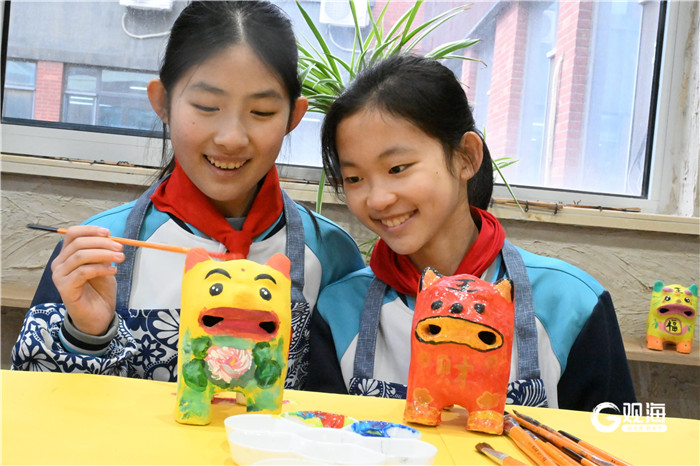
The art of making clay tigers in Jimo, Qingdao, has a history of over 400 years. [Photo/Guanhai News]


 Play
Play  Play
Play 